
Protecting the Gateway to Your Mind
GRID Mindful Monday: Protecting the Gateway to Your Mind
Mental Consumption
Summer just started and we can say it is a sultry hot Mindful Monday. I woke up, prayed, did my isometrics, went to the park; incorporated cardio while conducting Wellness Strategy education outreach in the community. Upon returning home at 11am, I did my midcore workout for 15-minutes, prepared breakfast, washed my hair, and resumed work around 1pm. If you are like me, you probably need a list to ensure you are on track.
That is the point, every day we make hundreds of decisions about what we eat, what we buy, where we go, how to meet deadlines, and where we spend our money to name a few. Yet few of us pause to consider another form of consumption that may be even more influential, that is; what we allow into our minds or what occupy our thoughts.
At GRID Holistic Living, we often say that holistic health is not simply about what is on your plate; it is also about what occupies your thoughts. Are you allowing people to live in your mind rent free? The conversations you entertain, the social media you scroll through to compete or impress, the news you consume, the movies you watch, the music you play, and even your own internal dialogue all become nutrients or toxins for your emotional and spiritual well-being. Just as processed foods can silently contribute to inflammation, chronic mental overload can quietly erode peace, resilience, and hope.
The Modern Diet of the Mind
Today's world operates on a 24-hour news cycle, endless notifications, viral controversies, gossip, and constant comparison. While technology has connected us in remarkable ways, it has also created an environment where fear, outrage, and anxiety compete for our attention and if not addressed can cultivate into some level of toxicity. Researchers have found that repeated exposure to negative media can increase stress, elevate anxiety, and contribute to emotional exhaustion. Our brains are designed to detect threats, making negative information naturally more attention-grabbing than positive news.
This is where GRID Holistic Living encourages accountability. Every day, you make choices about what you allow into your mind and spirit. Those choices matter. Ask yourself: Am I watching something that strengthens my faith, makes me laugh, teaches me something new, or inspires hope? Or am I repeatedly consuming content filled with fear, violence, anger, or hopelessness that quietly reopens old wounds or reinforces unhealthy thought patterns?
Just as your body becomes a reflection of the food you eat, your mind gradually becomes a reflection of the content you consume. Without realizing it, we can become emotionally malnourished while mentally overfed with junk. The danger lies in those two words: overfed and junk. Our minds can become saturated with information that entertains but never enriches, stimulates but never strengthens, and occupies our attention without adding value to our lives.
At GRID Holistic Living, we believe mindful living begins with intentional consumption. Protect your mind as carefully as you protect your body. Choose content that cultivates wisdom instead of worry, peace instead of panic, and hope instead of fear. What you repeatedly consume today will shape how you think, feel, and respond tomorrow.
Mindful Monday Self Reflection Exercise: Pause and Reflect
This week, ask yourself these questions:
1. Does this content uplift me or drain me?
2. Does this relationship support my growth?
3. Am I consuming fear more than hope?
4. Is my inner dialogue compassionate or critical?
5. What emotional patterns am I reinforcing every day?
These questions aren't meant to produce guilt. They are invitations to become aware. At GRID Holistic Living, Coach Adasa reminds her clients that self-reflection allows you to build awareness, which allows you to conduct self-check, and self-correct. Awareness is the first step toward transformation.
Your Inner Conversation Matters
Many people would never speak harshly to a loved one, yet they regularly criticize themselves. You might have said this or might have heard a child or an adult say the following: "I'll never get it right," "I'm too old," "I'm too far behind," or even "I'm not enough." Such toxic words can be overwhelming that leads to self-sabotage. In 2025, Coach Adasa co-sponsored a 5-week Masterclass on self-talk and self-love. If you are interested in the link on Spotify, please send your request to [email protected]. Over time, these repeated thoughts become mental habits that influence our decisions, confidence, and even our physical health through chronic stress responses.
Praying and mindful teach how to notice these thoughts without immediately accepting them as truth. Faith also reminds us to replace destructive narratives with truth, wisdom, and hope.
Solution: Feeding Your Mind Well
Just as you intentionally nourish your body with wholesome foods, intentionally nourish your mind. Consider replacing:
- Endless scrolling with reading something educational or inspiring.
- Negative and vulgar movie or music with uplifting and edifying songs and movies
- Constant breaking news with designated times to stay informed.
- Critical self-talk with gratitude and self-compassion.
- Toxic relationships with people who encourage accountability, growth, and grace.
- Noise with moments of prayer, reflection, and quiet.
Begin to develop atomic habits by making small daily and intentional choices that create lifelong habits.
The GRID Perspective
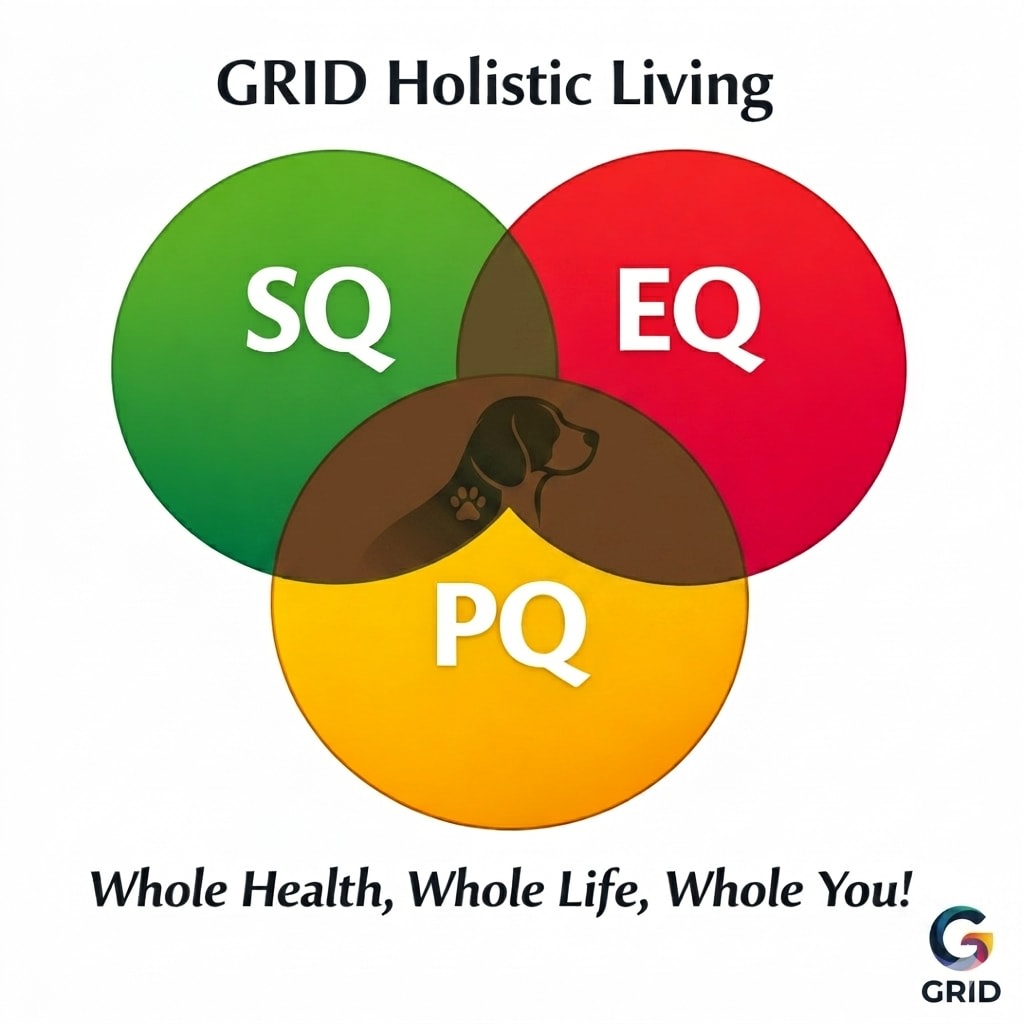
At GRID Holistic Living, we believe whole health includes your Spirit, Emotional, and the Physical man. It is with understanding that the failure to integrate all three dimensions, impact also your Finances, Environment, and Social well-being. Mental consumption affects every one of these dimensions. Remember the following:
Your thoughts influence your emotions.
Your emotions influence your behaviors.
Your behaviors influence your health.
Protecting your mind isn't avoidance; it's stewardship.
This Week's Mindful Challenge
For the next seven days, conduct a "Mental Consumption Audit."
At the end of each day, write down:
- What inspired you today?
- What drained your energy?
- What information brought peace?
- What information increased unnecessary anxiety?
- What one thing can you change tomorrow?
Transformation rarely begins with dramatic change. It begins with intentional awareness.
Spiritual Food
Keep thy heart with all diligence; for out of it are the issues of life-Proverbs 4:23 (KJV)
Final Thoughts
Mindfulness allows us to move from unconscious consumption to intentional living. Your mind deserves the same care and protection that you give your body. Choose wisely what enters your mind. Because every thought you repeatedly consume, festers and becomes part of the life you create.
GRID Holistic Living
"Whole Health. Whole Life. Whole You."
References
American Psychological Association. (2023). Stress effects on the body. https://www.apa.org/topics/stress/body
Garfin, D. R., Silver, R. C., & Holman, E. A. (2020). The novel coronavirus (COVID-19) outbreak: Amplification of public health consequences by media exposure. Health Psychology, 39(5), 355–357. https://doi.org/10.1037/hea0000875
Kabat-Zinn, J. (2015). Mindfulness. Hachette Books.
National Institute of Mental Health. (2024). Caring for your mental health. https://www.nimh.nih.gov/health/topics/caring-for-your-mental-health
Proverbs 4:23. New International Version. Biblica.
Siegel, D. J. (2020). The developing mind (3rd ed.). Guilford Press.
World Health Organization. (2022). Mental health: Strengthening our response. https://www.who.int/news-room/fact-sheets/detail/mental-health-strengthening-our-response
Connect With GRID Living
Share your questions or wellness goals, and we will respond with thoughtful, faith-grounded guidance, usually within two business days, to help you take your next holistic step. You can also provide feedback if you participated in one of GRID's virtual or in-person Food Preservation tours or provide feedback if you are consumer of any of GRID's products.